The Story I Didn't Want to Write
How a recurring nightmare, two stubborn characters, and a hay bale became South of Forever.
November 5, 2026
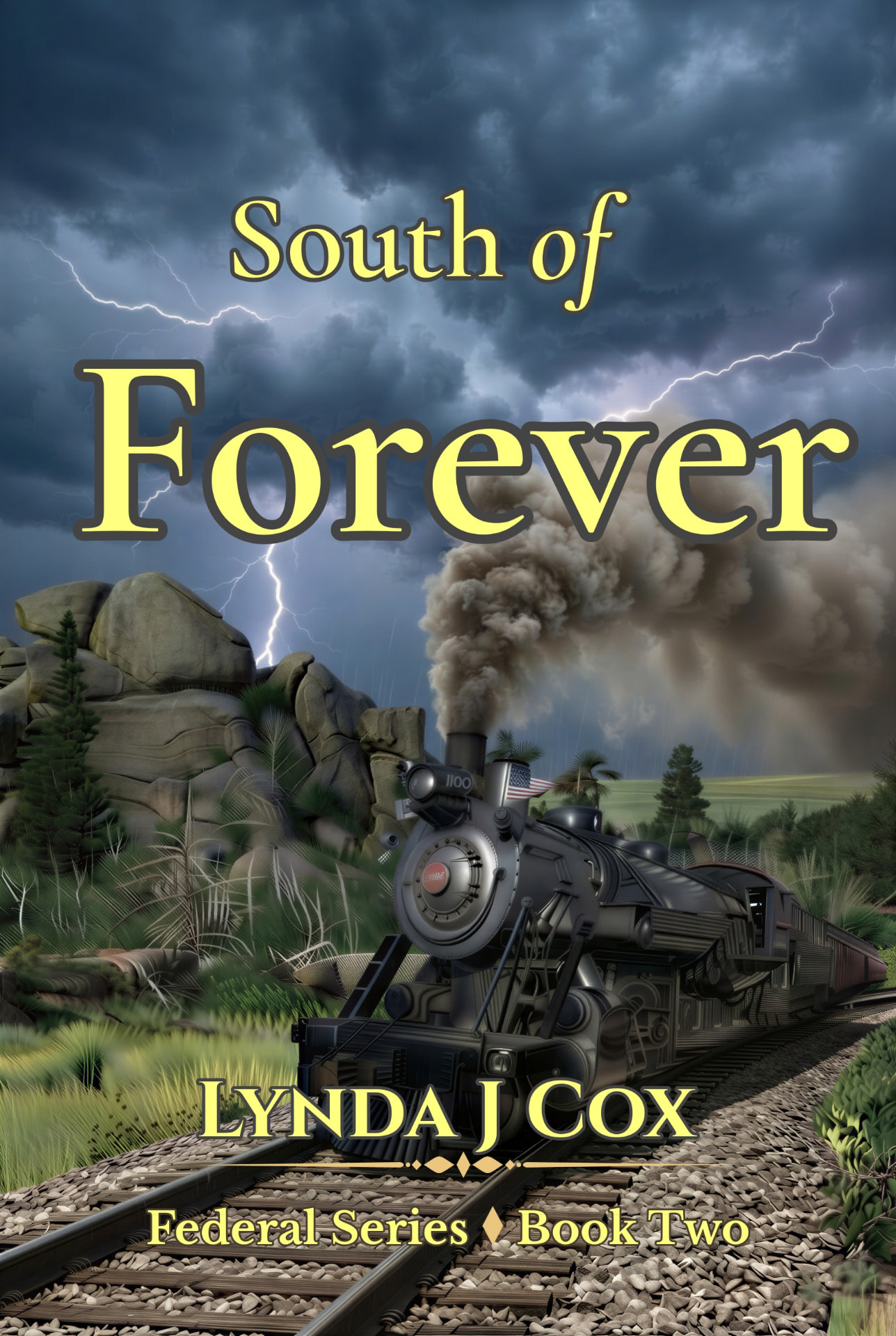
Some stories begin with a fascinating bit of historical research. Others start with a character whispering in an author’s ear, or a scene that refuses to go away.
South of Forever began with a nightmare.
Not a figurative nightmare, either. A real, honest-to-goodness nightmare that kept coming back, night after night, until I was afraid to go to sleep.
It was about 1985, and every night I found myself behind the wheel of a little Chevy Chevette, driving through a winter forest with several inches of snow on the ground.
There were headlights behind me.
They never got closer. They never fell back. No matter how far I drove, they were always there.
And I wasn’t alone in the car.
When I turned to ask my passenger what I should do, I discovered he was unconscious, with a bullet hole in his chest.
Then I’d wake up.
And the next night, there I’d be again.
I knew, somewhere in the back of my mind, that the woman driving the car wasn’t really me. I was simply seeing everything through her eyes.
That didn’t make the nightmare any less terrifying.
At the time, I had an author friend I met with every week to talk shop. Eventually, I told her about the nightmare.
Her advice was simple.
“Until you write their story, you’re going to keep having that nightmare.”
Oh, absolutely not.
Not a snowball’s chance in a very warm place.
I didn’t want to write that story. I didn’t want to know why that woman was driving through a snowy forest with a wounded man beside her and someone following them.
I especially didn’t want to find out what happened next.
A few days later, after yet another round of nightmares, I called my friend to complain that I didn’t want to write the damned thing, but it wouldn’t leave me alone.
She asked one question.
“What are their names?”
I didn’t even hesitate.
“A.J. Adams, Jr. and Allison Webster.”
And at that point, I realized I was writing the damn thing.
A Manual Typewriter and a Front Door
In 1985, I didn’t have a computer. I had a manual typewriter, and I started writing the contemporary romantic suspense that would eventually become the foundation for South of Forever.
I didn’t have to finish the manuscript. I didn’t even have to finish the first chapter.
All I had to do was get Allison to A.J.’s house.
He lived on St. George Street, in some fictional suburb of Washington, D.C., whose name has long since escaped me.
By the time I’d typed that first chapter and Allison walked through A.J.’s front door, the nightmare stopped.
Completely.
No more snowy forest. No more headlights that never got any closer. No more unconscious passenger with a bullet hole in his chest.
I can’t tell you why it stopped. I can only tell you that it did.
And somewhere along the way, two characters who had arrived in my imagination under the most unsettling circumstances became people I would spend years writing about.
From a Chevy Chevette to the Old West
The original manuscript was a contemporary romantic suspense. It was never published.
Years later, when I decided to take A.J. and Allison’s story and move it into a post-Civil War western setting, I was terrified.
Not because I couldn’t figure out how to rewrite the plot. That was the easy part, relatively speaking.
I was terrified I would lose the characters.
Allison Webster was smart, witty, empathetic as hell, and absolutely refused to play the damsel in distress. I knew who she was. I knew how she thought.
And when I began writing the historical version, there she was.
Allison. Completely intact.
A.J., on the other hand, worried me.
How in the world was I supposed to take a disgraced Marine Corps major who flew Apache helicopters and drop him into the western United States in the aftermath of the Civil War?
Those are two very different worlds.
The military culture was different. The technology was different. The social expectations were different. Almost everything about the circumstances surrounding him would have to change.
And I was afraid that somewhere in the process, I’d lose A.J.
The man I’d known since 1985 would disappear, and I’d end up with a stranger who happened to have the same name.
Some Things Refused to Change
The historical version was a complete rewrite, but not everything from the original story disappeared.
A.J. was still a widower.
Allison was still a twin.
And Gene Oakten?
Oh, Gene Oakten was still Gene Oakten.
Icy cold. Absolutely lacking in a conscience.
Apparently, some men can change centuries without acquiring a single redeeming quality.
But those were facts about the characters. Details of their histories and personalities I could carry from one manuscript to another.
What I couldn’t be sure of was whether A.J. would still sound like A.J.
Until he opened his mouth.
The Hay Bale Test
In the historical version, A.J. and Allison are aboard a moving livestock train car.
Allison is standing dangerously close to the open door, and A.J. has apparently had quite enough of that particular situation.
And then I wrote:
Without apparent effort, he lifted her and set her down a foot or so away. “Go sit down over there on that hay bale, before you fall out the door, or worse, knock me through it.”
And there he was.
A.J. Adams.
The same man I’d known for years.
Different century. Different circumstances. Different uniform.
Same exasperating man.
I cannot begin to tell you how relieved I was.
I’d taken him out of a world with helicopters and modern weapons and dropped him into a world of horses, steam locomotives, and the aftermath of the Civil War.
And somehow, he was still A.J.
Allison hadn’t lost herself in the transition, either.
I could change the setting, rewrite the plot, alter the circumstances, and rebuild the world around them.
But I hadn’t lost the people who made the story worth telling.
And Eventually, There Was a Book
The historical romance that grew out of that complete rewrite was published by The Wild Rose Press in 2014 under the title Smolder on a Slow Burn.

Today, readers know it as South of Forever, part of my Federal Series.

And to think it all started with a little Chevy Chevette, a snowy forest, headlights that never got any closer, and a man with a bullet hole in his chest.
I spent a considerable amount of time trying not to write that story.
It took one chapter, a manual typewriter, and Allison walking through A.J.’s front door to put an end to the nightmare.
It took considerably longer to get them into the Old West.
Apparently, A.J. and Allison had other ideas.
And more than forty years after they first appeared in my imagination, they’re still part of the world I write about.
For my readers: Have you ever encountered a character who stayed with you long after you finished a book? One you were delighted to meet again in another story?
I’d love to hear who it was—and why you never forgot them.