The Rifle They Called the Yellow Boy
Frontier Firearms, Part Two
August 13, 2026
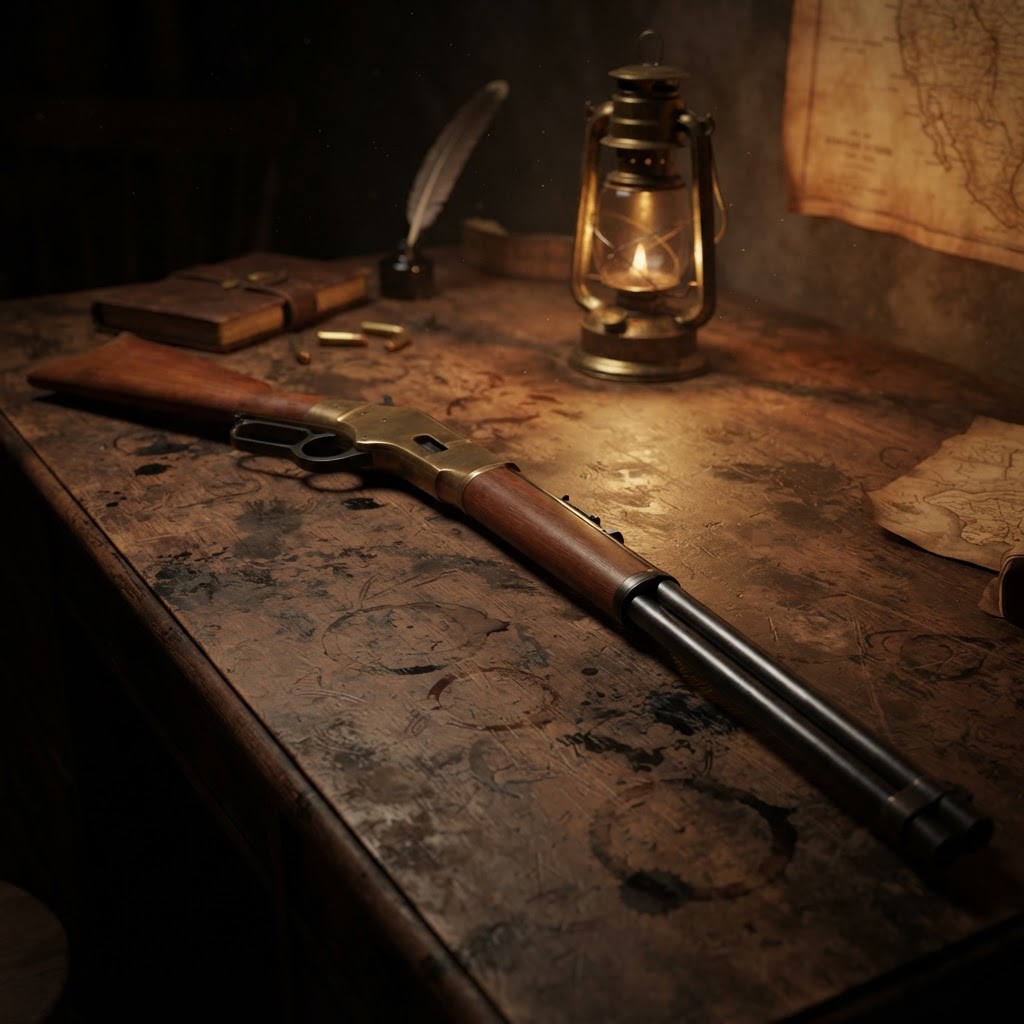
The handgun gets the legend. The rifle got the work.
Before the Winchester 1873 became "The Gun That Won the West," there was the Model 1866 — the first lever-action Winchester, and the one frontier men called the Yellow Boy for the bright brass receiver and buttplate that looked like tarnished gold against a saddle.
It was not a new idea so much as a better one. The 1866 improved on earlier repeating designs with a solid frame and a side-loading gate that let a rider feed cartridges one at a time without taking the rifle apart. The magazine tube ran beneath the barrel, holding sixteen or seventeen rounds of the .44 Henry rimfire cartridge. In a fight, that was a lifetime.
The Yellow Boy saw plenty of use on the frontier, though it was soon overshadowed by its younger brother, the 1873. Still, for a marshal or rancher riding in the late 1860s and early 1870s, it was the repeating rifle he could count on. It rode in a scabbard under the right leg, muzzle forward and down, where a man could pull it clear while stepping off a horse.
When my characters dismount, I try to remember that the rifle comes with them. Leaving it on the saddle of a horse that might bolt is a mistake a greenhorn makes exactly once.
Brass receiver aside, the 1866 was a working tool. It was not a long-range rifle by buffalo-gun standards, but inside two hundred yards, in steady hands, it was as much authority as a man could carry. And the name — Yellow Boy — stuck because a thing that distinctive on the trail becomes part of the language.