Faith in Something Greater
On the Redemption Bluff series
June 26, 2026
When folks ask me why faith runs through so many of my books, I have to be careful with my answer. I'm not writing sermons and I'm not writing religion, exactly. What I'm writing is faith in something greater — the quiet, stubborn belief that a person is worth more than the worst thing they've ever done, and that the trail forward, however rough, is worth walking.
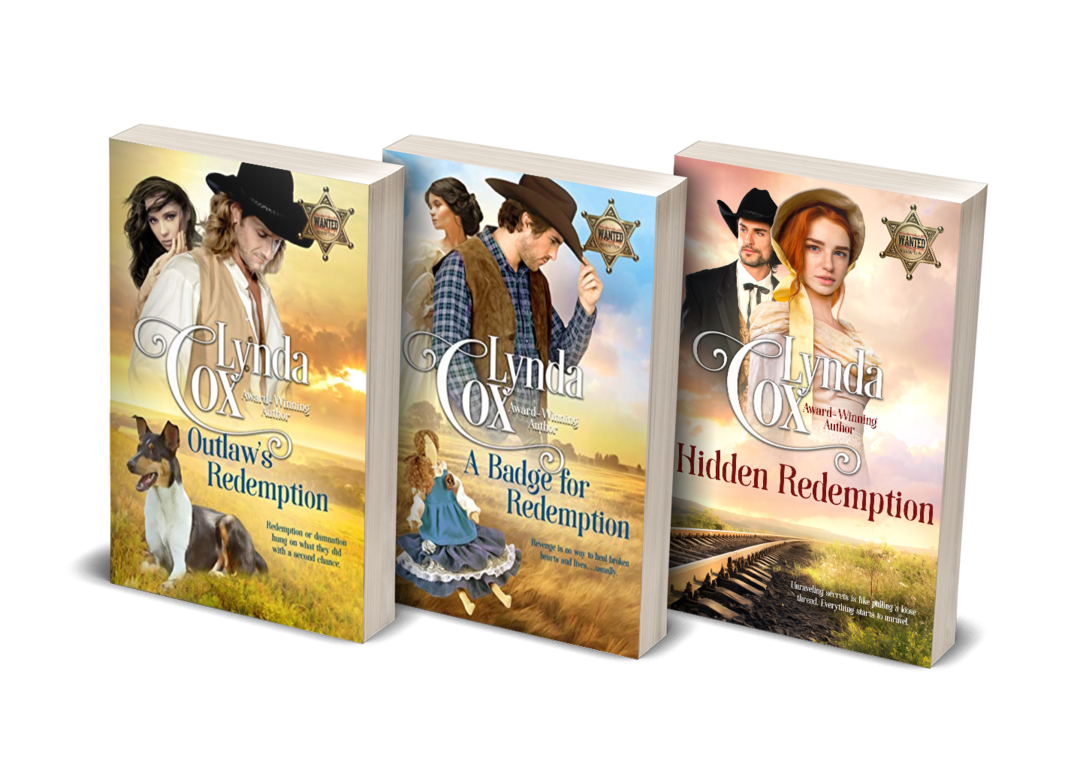
Nowhere has that shown up more plainly for me than in the Redemption Bluff series. Redemption Bluff is a multi-author series, and I was blessed to be asked to write three books in it. I still remember chatting with Kari Trumbo, who had the idea for the town in the first place, back when the whole thing was just a spark on the horizon.
Kari's premise was simple and beautiful: Redemption Bluff was a town for people looking for a second chance. Ninety percent of the original characters were outlaws — folks whose pasts would've had them hanged in any other territory, but who rode into the Bluff hoping the ground there might hold them a little more kindly.
I told Kari that if Redemption Bluff was going to mean anything, it needed a foil. There had to be a sister town — somewhere close enough to cast a shadow — where no one was looking for a second chance, and no one would have given one if you'd asked. A place that had made its peace with the worst in people and called it good enough. Kari agreed. And that's how the foil to Redemption Bluff came to be.
I think that's where the faith piece lives, honestly. Not in a steeple, not in a Sunday sermon, but in the difference between those two towns. One believes people can change. The other doesn't. And every character who steps across the line from one to the other is putting their whole life on the bet that the first town is right.
The frontier itself was a faith proposition. You didn't cross a thousand miles of prairie and mountain because you knew what was on the other side. You crossed because you believed something better was possible — a piece of land, a marriage, a name that hadn't been ruined yet, a self you hadn't been allowed to be. My outlaws and lawmen and mail-order grooms all carry some version of that same bet in their saddlebags.
So when I write a hero who's done hard things, or a heroine who has every earthly reason to give up and doesn't, what I'm really writing is that quiet faith. Faith that the story isn't over yet. Faith that grace, in whatever form it comes wearing, is real. Faith that a bluff called Redemption isn't just a name on a map — it's a promise the town intends to keep.
All three Redemption Bluff stories are available on Amazon.